User account menu

  • Log in
Home
67AR2ADkmck
From The Greatest Generation, One Unassuming Hero Among Many...

Main navigation

  • Home
  • Stateside
    • Trial Readmore
  • Service Timeline
  • England
  • Belgium
    • 25 December 1944
  • Holland
  • Photo Gallery
  • Germany

Trial Readmore

Lorem ipsum dolor sit amet, consectetur adipiscing elit. Sed non risus. Suspendisse lectus tortor, dignissim sit amet, adipiscing nec, ultricies sed, dolor. Cras elementum ultrices diam. Maecenas ligula massa, varius a, semper congue, euismod non, mi. Proin porttitor, orci nec nonummy molestie, enim est eleifend mi, non fermentum diam nisl sit amet erat. Duis semper. Duis arcu massa, scelerisque vitae, consequat in, pretium a, enim. Pellentesque congue.
  • Read more about Trial Readmore

25 December 1944

  • Read more about 25 December 1944

Colorbox Test

  • Read more about Colorbox Test

Germany

body { background-color: #bbd18f; }

Nazi ideology greatly impacted German civilian life during World War II by advocating discriminatory practices such as antisemitism and the persecution of "undesirables." The government dominated the arts, media, education, and other facets of public life while using propaganda to cultivate a Hitler cult. Forced labor became a defining feature of the system, and women's possibilities were curtailed.

  • Read more about Germany

Holland

body { background-color: #bbd18f; }

German propaganda, the rise of an underground resistance, and extensive rationing, movement restrictions, and mandatory blackouts were all part of Dutch life during the 1940–1945 German occupation of the Netherlands. A sizable section of the Jewish people was deported and killed, and the populace was forced to make tough decisions about resistance and cooperation. The complexity of Dutch society's wartime experience led to the emergence of a complicated post-war narrative.

  • Read more about Holland

Belgium

body { background-color: #bbd18f; }

Belgium was brutally occupied by the Germans for four years during World War II, starting with a quick military defeat in May 1940. Only a small percentage of the Jewish population survived the harsh food and fuel shortages, forced labor in German war enterprises, and the systematic persecution and deportation of the Jewish people to concentration camps like Auschwitz.

  • Read more about Belgium

England

body { background-color: #bbd18f; }

During World War II, English people had to deal with rationing of food and clothing, air raids, and the constant prospect of danger. However, they also had a strong sense of community and a strong desire to help the war effort. In addition to shortages and disturbances, such as the "blackout" and new wartime jobs, many children had to be evacuated. Due to the common experience of the war, there was a desire for a welfare state after the war, which included national health care and higher social security.

  • Read more about England

Stateside

body { background-color: #bbd18f; }

Widespread rationing, a surge in war production that ended the Great Depression, mass migration to industrial hubs, and the mobilization of a sizable military all contributed to the significant transformation of American life during World War II. Women and minorities joined the workforce in previously unheard-of numbers, and the "home front" included civilian initiatives like victory gardens, scrap drives, and buying war bonds.

  • Read more about Stateside

Daddy

By admin | August 17, 2025
  • Read more about Daddy

Ma

Daddy

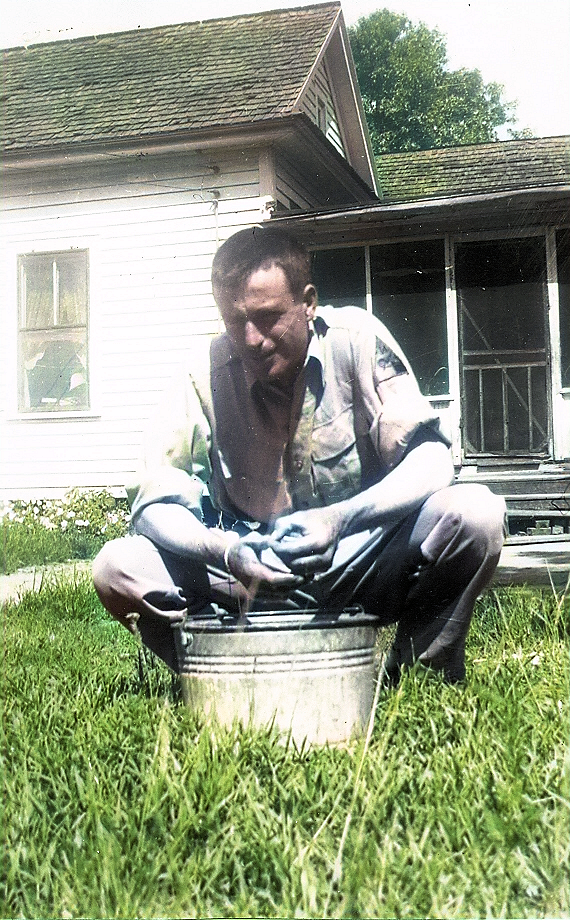
Daddy at washtub

Thu, 1 Jul 1943 - 12:00
Service Timeline

Home

body { background-color: #bbd18f; }

Kenneth McKethan was a native North Carolinian from Fayetteville (Cumberland County).  Ken was born on December 1, 1918, to D.A.

  • Read more about Home
Pagination
  • Current page 1
  • Page 2
  • Next page Next ›
  • Last page Last »
Subscribe to

Copyright © 2025 Robert McKethan - All rights reserved